
Protecting Combines From Mice: How to Save Wiring, Sensors, and Your Sanity in the Off-Season
After harvest, a combine can quietly turn into a “winter apartment” for mice. Residual warmth around the engine bay, dry plant debris trapped in cavities, soft insulation materials, and miles of cable loom - it’s basically premium rodent real estate. The consequences are rarely small: chewed wiring harnesses, damaged sensors, clogged ventilation passages, unpleasant odors in the cab, and the worst-case scenario - electronic faults on the very first day back in the field.
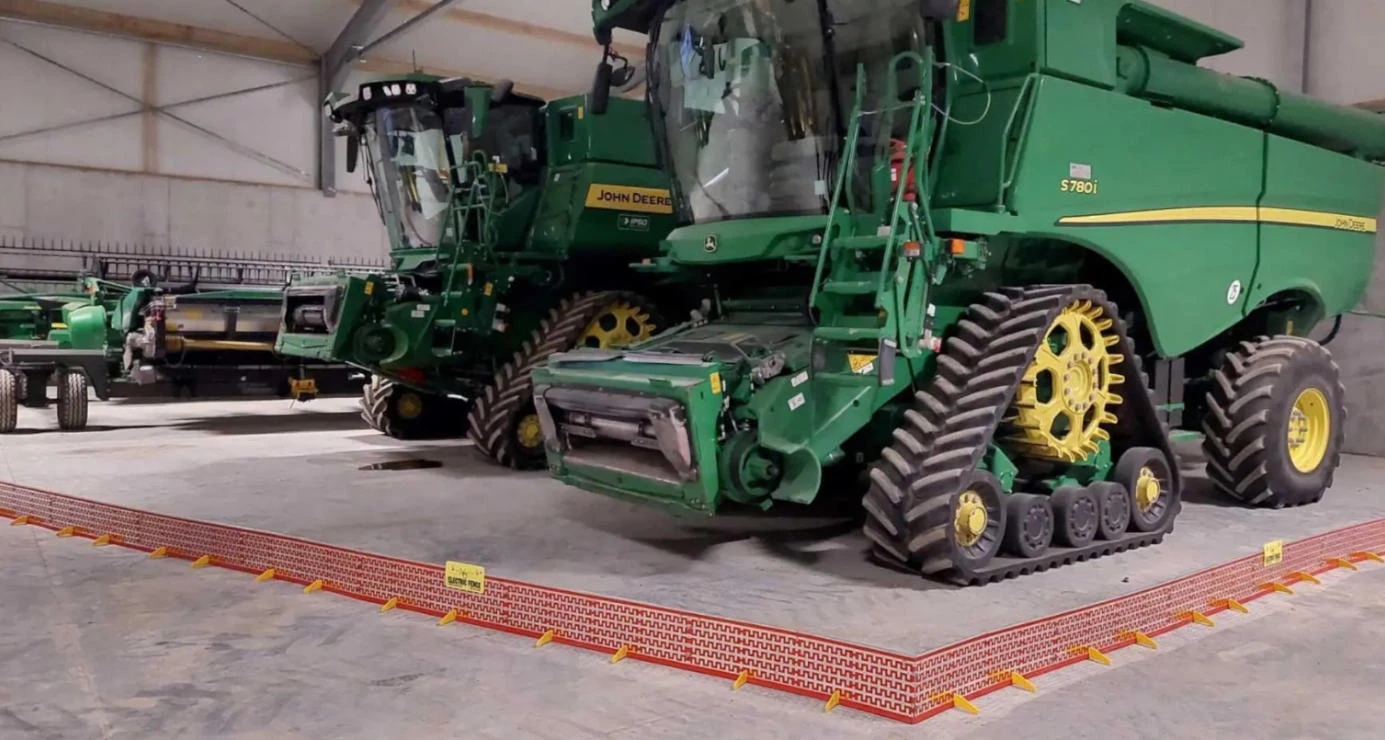
Below is a practical overview of modern ways to protect combines from mice in sheds and machinery barns. We’ll start with a “no-poison” option that’s been discussed in European farming circles: an electric barrier around the machine.
Why Combines Attract Rodents So Well
Food and nesting material are close by. Even after blowing out the machine, you’ll often find traces of grain, husks, dust, and chopped straw. For a mouse, that’s more than enough to settle in.
Warmth and shelter. Areas near the engine, belts, hydraulic lines, and under panels are protected from drafts and predators.
Wiring becomes a “tooth gym.” Rodent incisors grow continuously, so mice instinctively chew hard materials - insulation, plastics, rubber. One severed wire can shut down the whole machine during season.
A “No Poison” Solution: An Electric Barrier (Fence Energizer) Around the Combine
The concept is simple: build a closed loop of conductive tape or wire around the combine, placed low above the floor. When a mouse attempts to cross the line or climb via a wheel/stand, it receives a brief impulse and typically avoids repeating the attempt.
How it works (in practical terms)
Modern electric fence units produce short, high-voltage pulses of very low duration separated by pauses. With correct installation and functional equipment, this creates a deterrent effect without relying on toxic baits.
A practical setup for a machinery shed
Perimeter loop: run tape or wire around the combine so there’s no “open gate.”
Height: typically low above the floor to intercept the mouse’s ground route.
Mounting: use insulators/posts so the conductor does not touch the combine’s metal or the floor.
Power: a portable energizer (battery-powered or mains with an adapter - depends on the kit).
Grounding: essential for consistent performance; without it, the deterrent can be weak or unreliable.
Pros
No poison (lower risk for cats, dogs, birds, and staff).
Works as a physical/behavioral barrier, not just a scent-based hope.
Combines well with cleaning and mechanical sealing of the building.
Cons and typical mistakes
Any contact between the conductor and metal, wet debris, or plant material can “bleed off” the pulse - you need cleanliness and regular checks.
If the shed already has a high rodent population, a barrier alone may not be enough - some rodents may already be living “inside the zone.”
Other Effective Options for Barn Storage (Best When Combined)
The most reliable approach is integrated: remove attractants, block access, reduce population pressure, and check regularly.
1) Thorough cleaning before storage
Remove grain residues, dust, and straw fragments (especially in auger areas, under covers, around the chopper, near sieves and conveyors).
Use vacuum/air, plus washing where appropriate.
Eliminate nesting materials stored nearby (rags, insulation scraps, bags).
This is the foundation step that directly reduces the “why would I move in?” factor.
2) Seal the shed: “metal, not foam”
Mice fit through surprisingly small gaps, and soft materials are easily destroyed. In practice:
- close gaps using metal mesh, steel plates, cement/concrete;
- pay attention to doors, ventilation openings, and pipe penetrations;
- remember that rubber seals can be chewed - add metal reinforcement where possible.
3) Mechanical climbing barriers and eliminating “bridges”
A proven logic: make it difficult for rodents to get onto the machine.
Smooth metal collars/shields around supports or wheel access points can reduce traction.
Park so there are no easy “bridges” - ladders, boards, hoses, stacked materials leading up to the combine.
If possible, elevate or isolate key access points.
This doesn’t replace other methods, but it strengthens the overall system.
4) Traps and bait stations: population control
If rodents are already present, you must reduce numbers:
- mechanical traps (classic, reusable);
- bait stations (including non-toxic options depending on farm policy);
- smart placement along walls, in dark corners, and near entry routes.
Traps work dramatically better when there is no alternative food source lying around (grain spills, feed, mixed ration debris).
5) Ultrasound, light, and scents: only as an extra layer
Ultrasonic repellers and motion-activated devices exist and are widely sold. However, they’re best treated as a “discomfort factor,” not a guaranteed solution. Folk approaches (peppermint oil, strong scents, etc.) often provide temporary results, especially when infestation pressure is high.
Use them if you want - but only alongside cleaning, sealing, barriers, and traps.
6) Regular inspections and occasional “machine movement”
Rodents love quiet and stability. Helpful habits include:
- periodic inspections for droppings, nesting, and chew marks;
- starting or moving the machine occasionally during off-season to disrupt nesting attempts and reduce “settlement.”
A 30-Minute Pre-Storage Checklist
| Risk area | What to do | Why it helps |
|---|---|---|
| Combine | Fully clean grain/husks/straw | Removes “food + nesting” |
| Shed | Seal gaps with metal/mesh/mortar | Reduces entry points |
| Perimeter | Remove weeds/clutter | Fewer hiding routes |
| Control | Place traps/stations strategically | Lowers population pressure |
| Barrier | Install an electric perimeter loop | Blocks access without poison |
| Review | Inspect every 2-4 weeks | Catch problems early |
Where Rodents Most Often Damage a Combine (Check These First)
- wiring harnesses near the engine and hydraulics;
- under-cab areas and ventilation channels;
- fuse boxes and connectors;
- insulation and soft liners;
- any spots where plant debris remained after harvest.
Practical Conclusion
There’s rarely a single “magic product” that solves mice problems in combines. The most reliable barn-storage setup looks like this:
- a clean combine with no food source,
- a shed with sealed gaps (metal/mesh/mortar),
- population control with traps,
- an electric perimeter barrier as a no-poison stop line,
- regular inspections and prevention routines.
This reduces the risk of invisible wiring damage and avoids turning spring startup into a troubleshooting marathon.
If rodent damage forces you to rebuild brackets, mounts, fasteners, or other mechanical elements, spare parts for different agricultural machinery brands can be selected at bas.ua (BAS-Agro, Cherkasy). You can also order custom manufacturing of parts by drawing or by sample.
Add a comment
Comments
There are no comments yet. Be the first to comment.
You must be logged in to post a comment
Login