
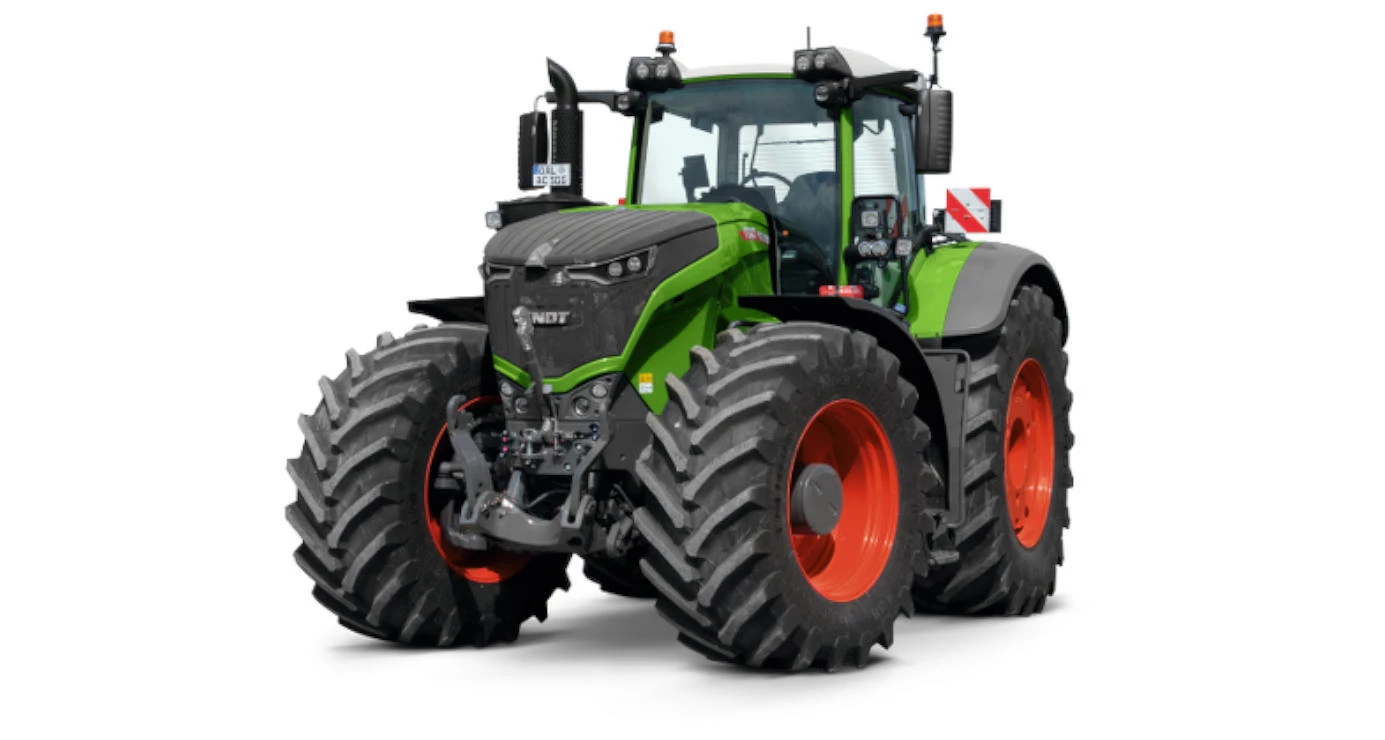
The Most Fuel-Efficient Tractors of 2025: Which Machines Really Save Fuel and Which Only Look Good in the Brochure
In 2025, tractor fuel efficiency is no longer a secondary issue. With diesel prices remaining high, even a difference of just a few grams per kilowatt-hour can turn into a noticeable amount of money over the course of a season. That is why farmers are paying increasing attention not only to power, weight, or equipment levels, but also to real fuel consumption in field and transport operations.
An important point should be made here: the primary source on this topic is not news coverage, but the DLG PowerMix test system and the separate official DLG reports for specific tractor models. DLG itself publishes the test methodology, the results database, and technical reports for the machines, while media outlets such as Agrarwelt compile summary rankings based on those figures. In other words, the ranking of the "most fuel-efficient tractors of 2025" is not a separate official DLG press release, but rather a journalistic compilation built on the latest DLG PowerMix results.
What Is DLG PowerMix and Why Is It Trusted?
DLG PowerMix is a standardized testing method used by the German Agricultural Society to evaluate tractor energy efficiency under conditions that are as close as possible to real-world work. The tests include field and transport cycles with different loads, and they measure not only diesel consumption, but also AdBlue consumption, productivity, and the machine’s overall efficiency. DLG explicitly states that PowerMix consists of 14 test cycles that simulate draft work, mixed operations, PTO work, and transport tasks.
For comparison, the key metric used is g/kWh. This makes it possible to compare tractors of different power classes much more accurately than simply looking at liters per hour. DLG also notes that modern tractors can achieve figures well below 300 g/kWh under this method, and that PowerMix results provide a transparent and repeatable basis for evaluating fuel efficiency.
Which Tractors Made the List of the Most Fuel-Efficient Models of 2025?
According to Agrarwelt’s summary of the latest DLG PowerMix results, the top ten most fuel-efficient tractors of 2025 are as follows:
- Fendt 1050 Vario - 233 g/kWh
- Fendt 942 Vario Gen6 - 237 g/kWh
- Fendt 728 Vario Gen7 - 242 g/kWh
- Fendt 620 Vario - 245 g/kWh
- John Deere 6R 185 - 256 g/kWh
- New Holland T7.300 - around 259 g/kWh
- Claas Axion 870 - around 262 g/kWh
- Claas Arion 660 Cmatic - 276 g/kWh
- Fendt 314 Vario - 277 g/kWh
- Deutz-Fahr 6180 P - approximately 279 g/kWh when recalculated; the publication also separately cites a figure of 0.324 €/kWh.
One trend becomes obvious immediately: Fendt clearly dominates the ranking, taking the first four places and five positions in the top ten overall. However, that does not mean the competition performed poorly. John Deere looks particularly strong in transport work, while New Holland and Claas traditionally hold solid positions in PTO efficiency and mixed-duty performance.
The Leader of the Ranking - Fendt 1050 Vario
With a figure of 233 g/kWh, the Fendt 1050 Vario remains a benchmark for fuel efficiency among high-horsepower tractors in the DLG PowerMix database. In the DLG report for this model, the value Powermix 233 g/kWh is stated directly, and the tractor delivers a result that is significantly better than the average of the machines tested. Its transport figures are not quite as spectacular as its field performance, but the overall picture remains extremely strong.
The secret behind this result is not one single feature, but a combination of factors: a high power class, a low-rpm operating concept, and a well-matched engine and continuously variable transmission. For large farms where the tractor works constantly in heavy draft applications, such a difference in consumption can translate into serious savings over time.
Fendt 942 Vario Gen6 - Very Close to the Top
Second place goes to the Fendt 942 Vario Gen6 with a result of 237 g/kWh. The official DLG report for this model confirms exactly that level of energy efficiency in the field PowerMix cycle, while also showing a transport result of 383 g/kWh at 40 km/h.
For the market, this is an important signal: even in the 400+ hp class, it is possible to achieve excellent fuel economy without sacrificing power. That is why the 942 is often seen as a machine for large agricultural operations that need not only strength, but also tighter control over cost per hectare.
Fendt 728 Vario Gen7 - A Standout in the 300 hp Segment
One of the most interesting models in the ranking is the Fendt 728 Vario Gen7. According to DLG data, this tractor performed so strongly in both field and transport cycles that the report explicitly states it was the most efficient transport tractor among those tested. Even at 60 km/h, it recorded lower consumption than many competitors at 40 km/h. In the 2025 compilation, the model is credited with 242 g/kWh in the field.
This is a highly illustrative example of how a modern all-round tractor can be efficient both in draft work and in logistics. For farms where machinery regularly travels between fields by road, that kind of versatility is especially valuable.
Fendt 620 Vario - A New Strong Player in the Mid-Range Segment
The Fendt 620 Vario also deserves special attention. The official DLG report for this model shows 245 g/kWh in PowerMix, and the document specifically notes that the tractor is more economical than the average of previously tested machines in all cycles, in some cases by a considerable margin. In transport at 40 km/h, it also posts 309 g/kWh, which is an exceptionally strong figure for this segment.
In fact, this is one of the standout fuel-efficiency stories of 2025. Large Fendt models have long been associated with energy efficiency, but the 620 Vario has shown that the brand can also set a very high standard in a more compact and more mainstream class.
John Deere 6R 185 - Not the Absolute Field Leader, but Very Strong on the Road
The John Deere 6R 185 AutoPowr does not top the overall ranking, but it remains one of the most interesting machines in the top ten. In its report, DLG states that in practical PowerMix measurements this tractor delivered better-than-average results almost everywhere compared with the other tested tractors, and it performed especially well in transport work. The document gives 269 g/kWh for Powermix and 349 g/kWh at 40 km/h on the road. In the media ranking, however, it is listed with 256 g/kWh in the field and 355 g/kWh in transport, meaning the difference comes from which slices of the test data were selected for the final compilation.
The practical conclusion is simple: for farms where the tractor spends a lot of time on the road, pulls trailers, hauls loads, and operates in a mixed rhythm of "field - road - base," the John Deere 6R 185 looks like a very serious option.
New Holland and Claas: Strong Competitors Without the Noise
The top ten also includes the New Holland T7.300 and the Claas Axion 870. For the New Holland T7.300, the official DLG report is available in the form of a technical PowerMix datasheet, and in the Agrarwelt summary the model is credited with around 259 g/kWh. The Claas Axion 870 scores around 262 g/kWh in the same compilation. Both tractors are highlighted in the publication as being very strong in PTO work and in overall engine-transmission efficiency.
This once again confirms that the market is not about a single brand alone. Across different power classes and for different working scenarios, farmers can choose a machine that is efficient not just "in general," but specifically for their own workloads.
What a Difference of 10 - 20 g/kWh Really Means
On paper, the difference between, say, 242 and 259 g/kWh may not look dramatic. But in real-world operation, especially over high annual workloads, it creates a clearly noticeable financial effect. DLG uses specific fuel consumption precisely because it shows how much fuel a machine needs per unit of useful work. The lower the number, the less diesel is required to achieve the same result in the field or on the road.
This is especially important for businesses where tractors are not used occasionally, but systematically - for hundreds or thousands of engine hours per year. In that situation, differences in efficiency gradually affect cultivation costs, logistics costs, and the overall profitability of the machinery fleet.
The Main Conclusion of 2025
If we focus specifically on DLG PowerMix results, then 2025 has shown several clear things.
First, Fendt is currently setting the benchmark for fuel efficiency, especially in the top positions of the ranking. Second, John Deere is highly competitive in transport scenarios. Third, New Holland and Claas remain very strong in terms of technical balance and efficiency across a range of operating conditions. Most importantly, it is no longer enough to rely only on rated horsepower or on marketing claims from manufacturers: if a farm is serious about controlling costs, it needs to look at the results of independent testing.
Add a comment
Comments
There are no comments yet. Be the first to comment.
You must be logged in to post a comment
Login