
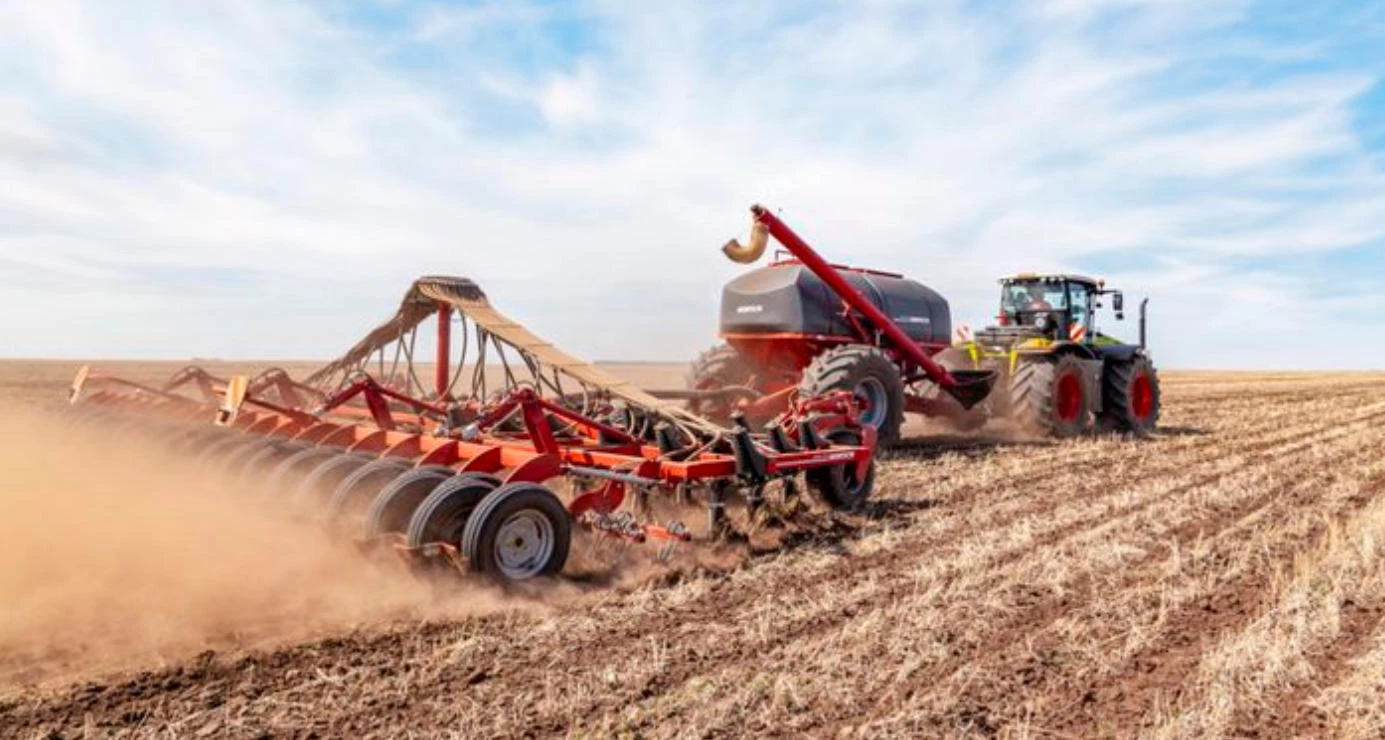
HORSCH Seed Drills in Kazakhstan: How Local Production Is Transforming the Seeding Equipment Market
The market for HORSCH seed drills in Kazakhstan continues to develop rapidly, and one of the key drivers behind this process has been the local assembly of machinery at the CT ASSEMBLY plant in Petropavlovsk. According to official information from the manufacturer, this joint German-Kazakh enterprise, founded in 2018, specializes in assembling CLAAS and HORSCH machinery, and HORSCH Sprinter seeding complexes are already being produced there.
For Kazakhstan’s agricultural producers, this is of particular importance. It is not simply a matter of supplying imported machinery, but of building a local production base that makes it possible to adapt machines more effectively to local soil and climate conditions, speed up service support, and improve the availability of the required configurations during the season. That is why the topic of HORSCH seed drills in Kazakhstan goes far beyond an ordinary news item about a new model.
Local Assembly of HORSCH in Kazakhstan
According to CT ASSEMBLY, the company manufactures wide-working-width HORSCH Sprinter seeding complexes in two main categories - Sprinter HD and Sprinter NT. The official company website clearly states that HORSCH Sprinter seeding complexes are produced at the plant in Kazakhstan, while the development history of the project includes the expansion of the assembled machinery range within the framework of an investment program.
It is also important that HORSCH had identified Kazakhstan as a strategic market for the Sprinter line even earlier. Company materials indicated that the Kazakhstan market was initially expected to receive locally assembled Sprinter 12 HD, Sprinter 15 NT, Sprinter 18 NT, and Sprinter 24 NT models. This clearly shows that localization is not a random decision, but part of the brand’s long-term strategy in the region.
A New Model in Production - HORSCH Sprinter 15 HD
Since the beginning of 2026, the plant in Petropavlovsk has started producing the HORSCH Sprinter 15 HD model. According to official information from the CT AGRO partner network, this machine became the fifth HORSCH Sprinter model manufactured at the local site. It complemented the existing range of universal HD cultivator-type seeding complexes with a 12 m working width, as well as NT tine-type machines with working widths of 15, 18, and 24 m.
For Kazakhstan farms, the launch of the Sprinter 15 HD appears to be a logical step. It is a universal cultivator-type seeding complex designed for sowing cereals, legumes, and small-seeded crops using Mini-till technology. The official description emphasizes that this machine can operate effectively on both light and heavy soils, which is especially relevant for the different natural zones of Kazakhstan.
Why the Sprinter Is a Good Fit for Kazakhstan
Kazakhstan has long been considered one of the most important markets for the HORSCH Sprinter line. HORSCH materials noted that the Sprinter NT was effectively developed with the needs of major direct-seeding markets in mind, above all Kazakhstan, Australia, and Canada. This means that we are not simply talking about the export of a standard machine, but about equipment whose concept was originally shaped around the real field conditions of dry regions and large-scale farming areas.
Official HORSCH materials also emphasize that farmers in Kazakhstan successfully use the Sprinter NT because this technology performs well during cold springs and under conditions of specific soil structure. In addition, HORSCH directly stated that about 90% of the brand’s customers in Kazakhstan chose the relevant seed drills, with the Sprinter 15 NT being one of the key models. The company also quickly adapted the machine to local requirements, including fertilizer application needs.
Another revealing point is the close cooperation between CT Agro and HORSCH in developing solutions specifically for Kazakhstan. Company materials highlight that the Sprinter NT became an example of machinery developed jointly for local conditions. Among the main customer requirements were durability, ease of operation, and large working widths. Local assembly in Kazakhstan logically continues this line of adapting machinery to the real needs of the region.
What the Expansion of Production Means for the Agricultural Sector
The launch of new HORSCH modifications in Kazakhstan is important not only for the brand itself, but for the country’s entire seeding equipment market. First, it strengthens the manufacturing presence of international companies in the region. Second, it gives farms access to machines already oriented toward local operating conditions. Third, local production traditionally simplifies service, spare parts logistics, and seasonal purchasing planning.
It is also interesting that, according to the material about the new model, nearly 80% of all Sprinter family seeding complexes are produced in Kazakhstan. If this company estimate remains valid, Kazakhstan is effectively acting as one of HORSCH’s key production centers for this machinery segment. This is no longer a peripheral market, but an important part of the brand’s global manufacturing architecture.
Demand for HORSCH Seed Drills in Kazakhstan
The popularity of HORSCH seed drills in Kazakhstan can be explained by very practical reasons. Large acreages, risky farming zones, moisture deficits in many regions, and the need for stable sowing and high productivity all create demand specifically for wide-working-width and durable seeding complexes. CT AGRO material separately emphasizes that the most popular models in the range today are the 15-meter HORSCH Sprinter NT and the 12-meter Sprinter 12 HD.
This clearly shows that the market is not looking simply for “large machinery,” but for specific solutions tailored to a certain cultivation technology. For some farms, HD cultivator-type machines are relevant, while for others NT tine-type complexes are the right choice. That is why the expansion of the model range matters so much: agricultural producers gain the opportunity to select a configuration more precisely suited to their fields, crop rotation, and farming system.
Spare Parts for HORSCH Seed Drills - A Question That Always Goes Hand in Hand with the Machinery
Any modern seed drill is not only about productivity and sowing precision, but also about the constant need for reliable operation, regular maintenance, and the timely replacement of working elements. This is especially true of seeding complexes that operate on large acreages and under tight seasonal schedules. That is why, alongside the growing popularity of HORSCH in Kazakhstan, the availability of quality spare parts naturally becomes an important issue as well.
In Ukraine, spare parts for HORSCH seed drills can be purchased from BAS-Agro LLC, based in Cherkasy. The company’s catalog includes a specialized section with parts compatible with HORSCH machinery: https://bas.ua/shop/compatible-with-horsch-000000049-1. At the same time, BAS-Agro LLC is able to supply spare parts for HORSCH seed drills to Kazakhstan as well, which is especially important for farms interested in stable access to the components needed to keep their machinery running.
This practical approach is particularly important at a time when farmers increasingly value not only the machine itself, but also the entire ecosystem around it - service, parts availability, delivery speed, and technical support. That is why information about spare parts does not look secondary: in real fieldwork, it is often no less important than the machine’s own specifications.
The story of HORSCH seed drills in Kazakhstan is an example of how an international brand does not simply enter a new market, but integrates deeply into it through local assembly, machinery adaptation, and the development of a partner network. CT ASSEMBLY officially confirms the production of HORSCH Sprinter seeding complexes in Kazakhstan, while the latest expansion of the range with the launch of the Sprinter 15 HD shows that this direction continues to strengthen.
For agricultural producers, this means a wider choice of machines, better suitability for local conditions, and a stronger manufacturing base within the region itself. And for the market as a whole, it means the further growth of Kazakhstan’s role as an important center for the assembly and development of HORSCH seeding equipment. If we speak about the practical side of operating such machines, the availability of spare parts from BAS-Agro LLC and the possibility of supply to Kazakhstan make the HORSCH topic even more relevant to the everyday needs of farms.
Add a comment
Comments
There are no comments yet. Be the first to comment.
You must be logged in to post a comment
Login