
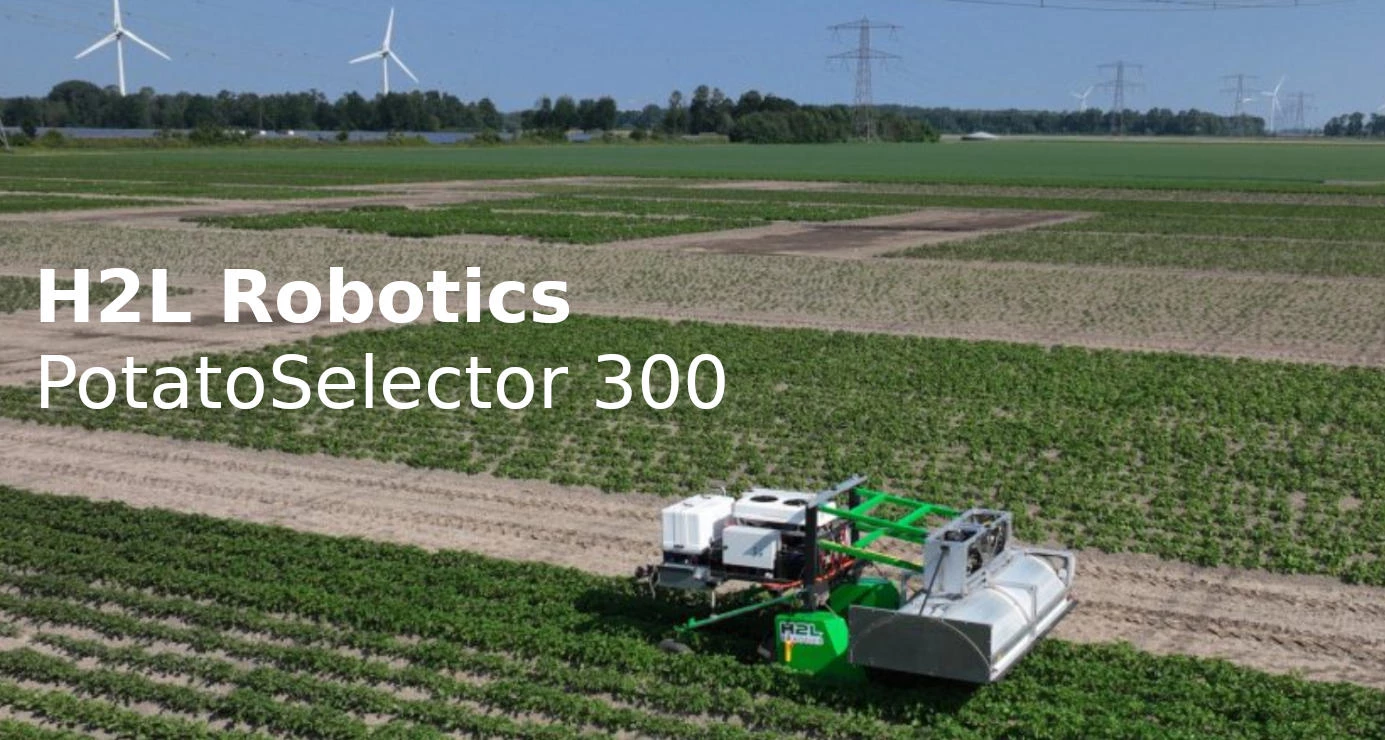
H2L Robotics PotatoSelector300: an autonomous robot that finds and marks diseased potato plants
In the Netherlands, field robotics is moving from demo projects into real, repeatable farm work. One clear example is H2L Robotics PotatoSelector300 - a fully autonomous machine designed to detect and mark diseased plants in potato fields. According to industry reports, the company plans to deploy the first eight robots on farms to validate performance under real seasonal conditions.
The concept is straightforward: the robot does not “treat” the crop. Instead, it performs precise in-field phytosanitary selection - it identifies suspicious or infected plants and places a clear mark on them. After that, farm staff remove those plants manually. This approach helps reduce disease spread across the field and lowers dependence on scarce seasonal labor at the exact moment when response speed matters most.
What PotatoSelector300 actually does
Based on the available descriptions, the robot travels autonomously along potato rows. The “eyes” of the system are cameras that scan plants and send images to a computer vision module. AI-based software then analyzes the images and detects visual symptoms of infection. Reports mention detection logic for issues such as Potato virus Y and Erwinia-related bacterial problems. It is also noted that the algorithms currently perform best on Spunta and Fontane, with ongoing work to expand coverage to more varieties.
Once a problematic plant is identified, the system marks it with chalk-based paint. The goal is simple - the mark must remain visible in field conditions so a worker can quickly locate the plant and remove it without repeating the inspection.
Engineering logic: autonomy, controlled lighting, and field productivity
Image-based diagnosis in the field is highly sensitive to lighting, shadows, and contrast. That is why the system design emphasizes a covered, illuminated area for imaging - it stabilizes conditions for the cameras and improves repeatability of detection results.
Open descriptions also mention operating parameters such as:
- - a diesel-electric drive concept
- - working speed around 3 km/h
- - a 4-row configuration
- - operation that can be close to continuous, in principle around the clock.
These details are important not as “cool tech,” but because they directly affect payback. In potato production - especially in seed potato operations - manual scouting and roguing are slow, expensive, and heavily dependent on people. A robot turns this into a more controlled workflow: consistent passes, uniform detection standards, and clear markings for the team that follows.
Technology background and cooperation
On the manufacturer’s website, H2L Robotics describes experience with autonomous selection robots in other crops, using GPS-RTK navigation plus camera systems and AI analysis to recognize disease patterns. PotatoSelector300 is positioned as an extension of this approach into potato fields.
Industry materials also note cooperation with research and machinery partners as part of broader innovation initiatives - a typical European pathway where a field robot moves from data collection to prototype, then to pilot deployments on commercial farms.
Why this matters for Ukrainian farms
Ukrainian potato production faces the same structural challenges seen across Europe: labor shortages during peak periods and growing demand for more accurate phytosanitary control. Robots like PotatoSelector300 are interesting because they automate the hardest part - systematic searching - while leaving the final action to humans (plant removal). In practice, this is often easier to integrate than fully robotic removal or “treatment” concepts.
There is also a very practical angle: any autonomous machine operates in harsh field conditions, meaning serviceability, consumables, and fast replacement of wear parts become crucial - especially when the season does not wait.
That is why having a reliable source of spare parts and agricultural components is a real advantage. BAS-Agro LLC (Cherkasy) supplies spare parts for agricultural machinery of various brands. You can select and order the required items online at https://bas.ua/. In-season, when every hour of downtime converts into lost quality or yield, fast access to components and dependable logistics can be just as important as the innovation inside the machine itself.
What to check before adopting this class of robots
To evaluate the real potential, farms should focus on three areas:
- Variety coverage and detection stability - current best results are reported for Spunta and Fontane, while other varieties may require additional training and validation.
- Field conditions - ridges, weeds, uneven terrain, and changing light can affect computer vision, so performance must be tested across different field backgrounds.
- Post-marking operations - the robot marks plants, but the farm needs a clear procedure for how quickly a team follows and removes them, otherwise the benefit can be diluted.
Conclusion
PotatoSelector300 is a strong example of “pragmatic autonomy” in agriculture. It does not replace the entire process, but it automates the most time-consuming and critical step - systematic detection and marking of problem plants. If the claimed autonomy, speed, and accuracy are confirmed at farm scale, this is exactly the type of technology that can change the economics of field operations.
Add a comment
Comments
There are no comments yet. Be the first to comment.
You must be logged in to post a comment
Login